 Skip To Main Content


Cruciferous Vegetables and Healthy Estrogen Metabolism During Menopause*
By Jesse Martin, M.S.
Published

Each year, roughly 1.3 million women in the U.S. reach menopause, a natural biological stage that marks the end of the reproductive years. It is defined as the point when a woman has gone twelve months in a row without a menstrual period, which usually happens sometime in her early 50s.
During the menopausal transition, estrogen and progesterone naturally decline, leading to changes in how the body feels day to day. For many women, this includes occasional hot flashes and night sweats, altered sleep, shifts in mood, and changes in energy. These experiences can start during perimenopause (the transitional years before menopause) and may last for several years afterward. Women navigating this transition often review their options with a qualified health-care practitioner, including nutrition and lifestyle approaches.
Nutritional changes are another route many women consider, and cruciferous vegetables in particular have drawn attention for how they may support the body's own hormone-related pathways during these years.*
What Are Cruciferous Vegetables?
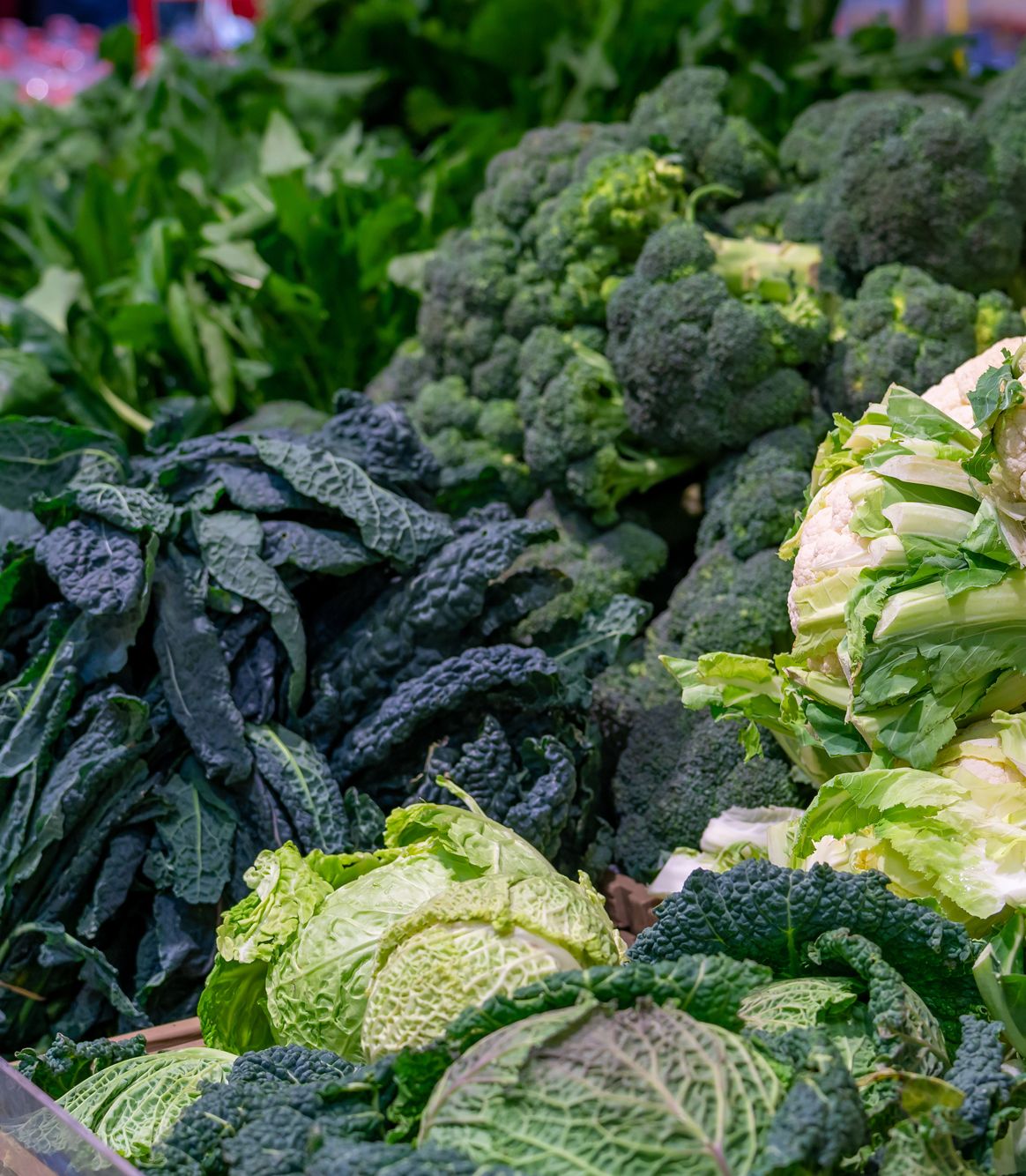
Cruciferous vegetables are a family of plants that includes broccoli, cauliflower, cabbage, Brussels sprouts, kale, and mustard greens. These vegetables are rich in plant compounds called glucosinolates. When cruciferous vegetables are chopped, chewed, and digested, glucosinolates can be converted into other beneficial compounds that the body can use. One of these is indole-3-carbinol (I3C). For women moving through menopause, these plant compounds may be especially helpful for how they support the body's normal handling of hormones.*
DIM and Healthy Estrogen Metabolism*
After the body forms I3C from cruciferous vegetables, some of that I3C is converted in the stomach into another compound called diindolylmethane (DIM). Of the cruciferous compounds studied for hormone support, DIM has drawn the most attention. As part of normal metabolism, the body breaks estrogen down into a range of metabolites. DIM may help support the body's normal estrogen metabolism pathways.* Beyond estrogen metabolism, DIM may also support a healthy inflammatory response and healthy antioxidant status.* For women in the menopausal years, this cruciferous vegetable derivative may be a helpful part of a broader approach to healthy hormone balance and normal detoxification.*
Getting a meaningful amount of DIM through food alone is very difficult. For example, you would need to consume roughly 50 cups of broccoli in a single day to create 100 mg of DIM. For this reason, many women turn to an estrogen metabolism support supplement to reach a consistent daily serving.* Many of these formulas serve as a DIM supplement for estrogen balance, and will pair DIM with other cruciferous-derived ingredients for broader support.*
Broccoli Seed Extract
One of the most common pairings with DIM is broccoli seed extract. Broccoli seeds are especially rich in glucoraphanin, another naturally occurring compound found in cruciferous vegetables. With the help of an enzyme called myrosinase, glucoraphanin can be converted into sulforaphane. A seed extract carries a higher concentration of these compounds than the whole vegetable, delivering more than a typical serving of broccoli would.
Once formed, sulforaphane helps activate the body's natural production of certain enzymes involved in processing and eliminating compounds it no longer needs, including normal byproducts of metabolism.* These same pathways also help the body process used estrogens, which is why sulforaphane is studied for its role in supporting healthy estrogen metabolism and normal detoxification and elimination pathways.*
Mustard Seed
For the body to convert glucoraphanin into sulforaphane, it needs an enzyme called myrosinase. Mustard seeds are naturally rich in myrosinase, which is why mustard seed is often paired with broccoli seed extract in supplement formulas. Without enough myrosinase, much of the glucoraphanin would pass through the body unused, leading to lower sulforaphane production, and less support for the detoxification pathways that help the body process estrogen.*
Pairing these two ingredients may support more efficient sulforaphane conversion.*In a clinical study, adding mustard-derived myrosinase to a broccoli seed extract increased the amount of sulforaphane absorbed compared with broccoli seed extract alone.
Supporting the Body Through Menopause
Each of these cruciferous ingredients contributes something different, and they tend to work best when combined. Broccoli seed extract provides glucoraphanin, mustard seed provides the myrosinase enzyme needed to convert glucoraphanin into sulforaphane, and supplemental DIM delivers a concentrated amount of a compound the body naturally forms from cruciferous vegetables. Combined, they may support healthy hormone balance, something many women look for during the menopausal years.*
While menopause is a natural stage of life, thoughtful support can help women feel more like themselves through the change. Cruciferous vegetables and their associated compounds are studied for their role in supporting healthy estrogen metabolism and normal detoxification.* These ingredients can be a meaningful part of a daily supplement regimen, with guidance from a health-care provider to help you find the right approach for the menopausal transition.*
Key Takeaways
- Menopause is a natural stage of life marked by twelve consecutive months without a menstrual period, usually arriving in a woman's early 50s and bringing a natural decline in estrogen and progesterone.
- Cruciferous vegetables, such as broccoli, cabbage, and mustard greens, are rich in plant compounds such as indole-3-carbinol (I3C).
- Diindolylmethane (DIM) is a compound the body produces from I3C derived from cruciferous vegetables, and supplements often supply it in a concentrated, standardized amount that diet alone rarely provides.
- DIM may promote healthy estrogen metabolism and support normal detoxification during the menopausal years.*
- Broccoli seeds supply glucoraphanin, which the body converts into sulforaphane. Mustard seed supplies the myrosinase enzyme that makes that conversion possible.
- Broccoli seed extract, mustard seed, and DIM are frequently combined in a comprehensive hormone balance formula to support healthy estrogen metabolism, antioxidant status, and normal detoxification.*
*These statements have not been evaluated by the Food and Drug Administration. This product is not intended to diagnose, treat, cure, or prevent any disease.
Menopause is a natural stage of life defined as twelve consecutive months without a menstrual period. It marks the end of the reproductive years and occurs on average around age 52. The years leading up to it are called perimenopause.
Cruciferous vegetables are a plant family that includes broccoli, cauliflower, cabbage, Brussels sprouts, kale, and mustard greens. They contain unique plant compounds called glucosinolates and indoles, which the body converts into other active compounds during digestion.
DIM is a compound the body forms from indole-3-carbinol, which is found in cruciferous vegetables. Because whole vegetables provide only small amounts, many supplements include DIM in a concentrated form to supply a more consistent serving.
Broccoli seed extract provides glucoraphanin, which can be converted into sulforaphane, while mustard seed supplies the myrosinase enzyme needed for that conversion. Pairing the two may help the body absorb more sulforaphane than broccoli seed extract alone.*
Cruciferous compounds like DIM and sulforaphane are studied for their role in supporting healthy estrogen metabolism, antioxidant status, and normal detoxification during the menopausal years, and are often found in hormone balance supplements for women.*
Yes. A qualified health-care practitioner can help you understand how these ingredients fit into a daily hormone balance supplement based on your needs and goals.*